

31 May The incredible online service for the Game Boy Color: Trading a Pokémon over the internet cost 10 yen.
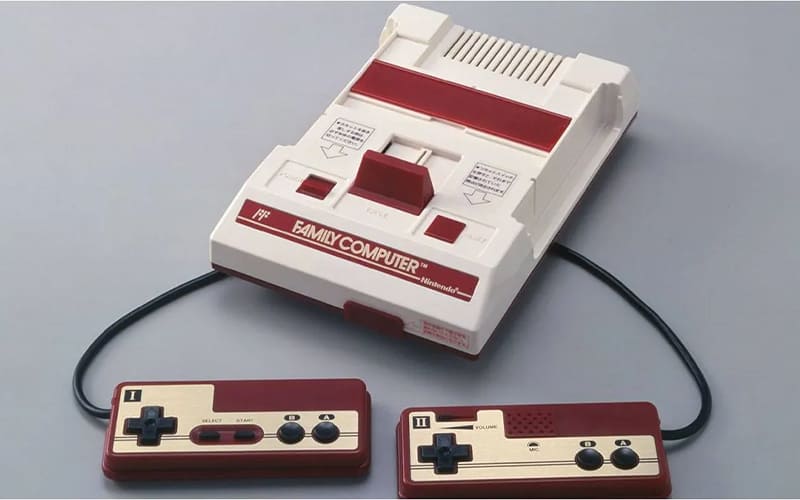
Most Nintendo consoles offered some form of internet connectivity. At least in Japan, the Famicom (the Japanese equivalent of the NES) allowed access to banking services from home, and the N64 even had its own dedicated online platform. With the right cable and a mobile phone, you could connect your Game Boy Color to the Mobile System GB to play Monopoly, trade Pokémon, and, if you knew Japanese and owned a Game Boy Advance, experience the written horror of Play Novel: Silent Hill.
The Mobile System GB wasn’t Nintendo’s first attempt at offering internet access on its handhelds. While this technology didn’t make sense on the Game & Watch consoles, which were essentially LCD handhelds, the original monochrome Game Boy already featured GB Kiss from Hudson Soft. However, that system primarily served to connect the handheld to a PC. The major advantage of the Mobile System GB was that the service could be used not only at home, but anywhere. As the name suggests, the use of mobile data was essential – not via Wi-Fi, but via cable.

The cable in question is the Mobile Adapter GB, developed and produced by Nintendo in collaboration with the up-and-coming mobile phone provider KDDI. It evokes memories of the time when Nintendo released peripherals and services whose functionality could be easily explained by glancing at the packaging and reading the label. Indeed, its appearance and function—the connection between the Game Boy Color and a mobile phone—are remarkably simple. However, each package included a module called the Mobile Trainer, which served as an interactive manual.

The starting point for this unusual initiative is Mobile21, a joint venture between Nintendo and Konami, which was founded in 1999 with the aim of developing projects for the future Game Boy Advance that would enable new functions for its games and original features that would utilize the network connections of the time.

It goes without saying that the internet was very different before the turn of the millennium. While data packets were exchanged, the costs and processes for accessing and exchanging information were far more complex than they are today. And even back then, Japan was almost a decade ahead of us: while they were already trading Pikachus for Rattata, we in the West were still marveling that you could play Snake on a Nokia 3310s.

From that point on, Nintendo’s handheld consoles of that era, just like the current Nintendo Switch and Switch 2 models, no longer had a modem. Another significant difference was that they also lacked Wi-Fi connectivity. Therefore, the hardware (i.e., the cable) that would enable data exchange over a network connection for mobile devices was developed in parallel. Although the idea was promising, Mobile21 only released eleven games.

Although the idea for this initiative originated in 1999, the official public launch of the Mobile System GB service and the Mobile Adapter GB cable didn’t take place until August 2000 at Nintendo Space World. This event was, in a sense, Nintendo’s annual E3, where the company presented its most important new products all at once.

One of the first games compatible with the service will be Pokémon Crystal Version for the Game Boy Color. This will enable online battles and trading, events, and even a newsletter. However, each online Pokémon trade will cost 10 yen.

The Pokémon phenomenon is now experienced worldwide simultaneously and with the same intensity, but initially, the Japanese were years, sometimes even decades, ahead of us. To give you an idea: While the Red and Blue versions were already being played in Spain, Japan was already gripped by Pokémon fever with the second generation, Gold and Silver. This lead increased significantly with the release of Pokémon Crystal and the possibilities offered by Nintendo’s online service.

Both the GB Mobile Adapter and the GB Mobile System Service were launched in Japan on January 27, 2001. Implementation in the West made no sense for three reasons:
- The service was managed in Japan by the operator KDDI Corporation, which had recently been formed through the merger of three companies.
- Most mobile phones in Europe and America at that time lacked the technology or infrastructure for such functions. We’re talking about the era of the Nokia 3310, after all.
- And to be honest, only five compatible games were released worldwide: Pokémon Crystal, Napoleon, Top Gear GT Championship, Mario Kart: Super Circuit and ESPN Great Outdoor Games Bass 2002.
And to be honest, only five compatible games were released worldwide: Pokémon Crystal, Napoleon, Top Gear GT Championship, Mario Kart: Super Circuit and ESPN Great Outdoor Games Bass 2002.

From here, we can turn to the main topic: What was the internet experience like with the Mobile System GB service? After connecting the cable to the Game Boy Color, a one-time setup fee of 400 yen was charged, and the connection subsequently cost 10 yen per minute. That’s equivalent to less than ten euro cents today. However, there were different features depending on the game.

In Pokémon Crystal Version, connecting the Game Boy Color and game cartridge to the Mobile System GB via a mobile phone enabled two previously locked features: the Mobile Menu and the Mobile Stadium Menu. The former served as the key to the Battle Tower and displayed news, updates, and events, while the latter allowed Pokémon trading and battles between players from Pokémon Centers. At the time, this was a true revolution.

In addition to the points mentioned above, Game Freak utilized the capabilities of the GB mobile system to host events, occasionally distribute content and items to players, and even offer the GS Ball, which could be used to catch Celebi. Many of these ideas remained exclusive to Japan, others were implemented in different ways, and in the case of the Battle Tower, the events were simply omitted, leaving the possibility open.
Sorry, the comment form is closed at this time.